

Food, Cravings & Behaviour
FORMAT: Webinar, Self-paced
DURATION: 80 hours
ELIGIBILITY: Open to Certified Health Care Practitioners
Why Do Clients Struggle with Food — Even When They Know What to Eat?
Exploring Our Relationship with Food: Understanding the Physical, Neurochemical & Psychological Drivers of Eating to Create Lasting Change
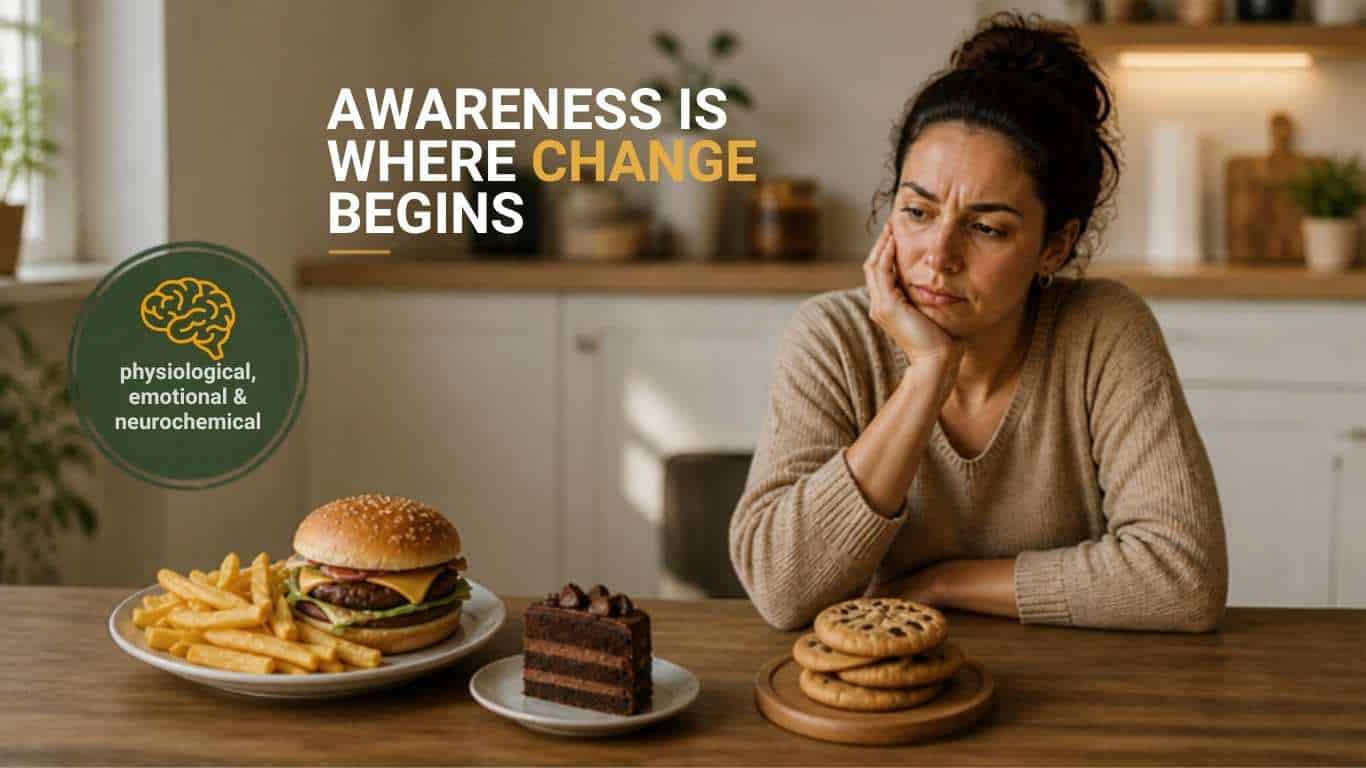
Knowing what to eat doesn’t always translate into healthier eating habits. Food cravings, emotional eating, and weight challenges are rarely just about willpower or nutrition knowledge.
Our Food, Cravings & Behaviour online continuing education course, created by Amy Bondar, explores the complex relationship between the body, brain, emotions, and eating behaviour.
Discover what drives these patterns and learn practical, individualized approaches to help clients move beyond the struggle and develop healthier, more sustainable relationships with food.
Go Beyond Nutrition Advice — Understand the WHY Behind Eating Behaviour
Rather than viewing eating habits from a purely psychological perspective, this course takes a whole-person approach, exploring the interconnected factors that influence food choices, cravings, motivation, and behaviour.
You will learn how physical processes, neurotransmitters, emotional responses, learned habits, and environmental influences can shape our relationship with food.
By understanding these connections, nutrition practitioners can gain new perspectives on why clients struggle to make dietary changes, even when they know what they should be doing.
What You Will Learn
Decoding Food Cravings: Understanding the Science Behind Eating Behaviour
- Physical & Psychological Drivers: Explore the interconnected factors that influence eating patterns and food choices.
- Brain Chemistry & Neurotransmitters: Understand the role of four major neurotransmitter systems in eating behaviour.
- Nutrition, Mood & Motivation: Discover the connections between nutritional factors, emotions, cravings, and motivation.
- Habits & Environmental Influences: Examine how learned behaviours, routines, and surroundings shape eating patterns.
- Individualized Client Support: Explore compassionate, practical approaches to helping clients navigate eating and weight-related challenges.
Help Clients Move Beyond the Struggle
When clients repeatedly struggle with cravings, emotional eating, or maintaining dietary changes, more nutrition information may not be the answer.
Understanding the deeper influences behind eating behaviour can help practitioners approach these challenges with greater insight, compassion, and individualized support.
Learn what drives these patterns and discover new ways to help clients move beyond the struggle and build healthier relationships with food.
Meet Your Instructor — Amy Bondar
 Amy Bondar is a graduate of Edison Institute of Nutrition, Nutritional Therapist, Certified Eating Psychology Coach, author, and professional speaker with over 23 years of clinical and teaching experience in the nutrition and wellness field.
Her experience brings together nutritional knowledge and eating psychology to help practitioners better understand the complex factors influencing food and behaviour.
Eligibility
Holistic nutrition practitioners and health professionals looking to expand their understanding of eating behaviours and bring fresh perspectives and practical insights to their client work.
Ready to Understand the WHY Behind Food Cravings?
Expand your knowledge beyond traditional nutrition education and discover a more comprehensive approach to understanding eating behaviour.
Enroll in Food, Cravings & Behaviour Today!
Continuing Education Fees
$349.00 (+ applicable taxes)
All fees are in Canadian dollars
Instructional Material Included
All essential instructional materials are included in your course.
Recommended Optional Resources
Additional recommended resources are provided for students who wish to expand their knowledge and explore topics in greater depth.
Upgrade Your Skills or Specialize in an area of the nutrition field today!
Continue your professional development and take your skills well beyond your initial training.
What Student’s Say…